
The Humanistic Gap, Part 1: Hidden In Plain Sight
Is anybody else seeing this?
I’m talking about a nervous system in crisis. Not one person’s nervous system, but an entire organization full of them, worn down by years of disruption that never got named, processed or addressed.
There’s a word that fits here: co-regulation. It’s like tuning forks. When one vibrates, others nearby begin to vibrate as well. Human nervous systems work much the same way. Discomfort rarely stays contained to one person. It moves through teams, departments and organizations.
We keep circling around it with discussions of uncertainty, productivity, retention rates, engagement scores and return-to-office mandates. We measure everything on the surface and call it insight. Did anyone stop to wonder why engagement scores looked different? Engagement belongs to a person. Every retention challenge belongs to a person. Every productivity concern belongs to a person. Insight is only valuable when it is applied and executed in a meaningful way – not an acronym of the 5 steps to ‘this’ or the 7 ways to do ‘that’.
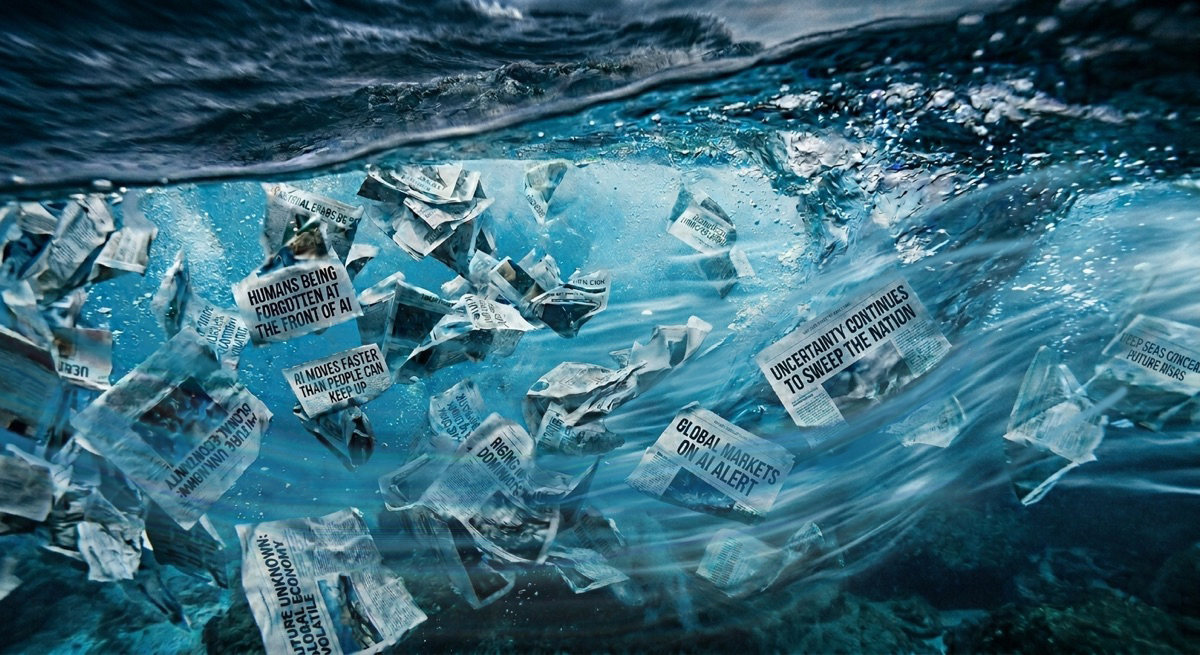
People do not leave their nervous systems at the door when they come to work.
The conversation happening at the strategic level is largely economic, operational and structural. What is missing consistently in most environments is the human experience underneath those metrics. That distance is what I’m calling The Humanistic Gap.
Not every organization is in crisis. Some leaders have built cultures where people feel genuinely safe, informed and valued over time. If that’s you, this series will affirm what you already know. For everyone else – and in my coaching experience, it is most – this is worth sitting with.
COVID Didn’t Ask Permission
COVID and its impacts didn’t go through change management. It didn’t offer a transition plan. COVID said figure it out by Monday – and organizations complied. Quickly.
This revealed something important: organizations can move quickly when survival is the driver. However, change at this speed without integration time is not transformation; neurologically your nervous system will feel this as a threat. COVID splintered people into individual quarantines, called it a shared experience and then handed everyone a return-to-office memo and told them to get back to it. Every new COVID strain zapped that nervous system again.
Someone labeled it the “new normal”. That was a lie spun into a cliche. Nothing was normal.
This brings to mind a response system that is often used after a natural disaster or a horrible community tragedy. After a natural disaster, we don’t hand people a pamphlet and tell them to be more agile. We perform a Critical Incident Stress Debriefing (CISD). We acknowledge that something happened that exceeded normal coping capacity. We slow down, we process with them and we stabilize before we rebuild. It is a critical step to stop and notice the impacts. It is protective and it is effective.
COVID was a mass casualty event for the psychological contract between humans and work. Nobody called the CISD team. We just told people to bring a mask and log back in.
If we wouldn’t hand an earthquake survivor a five-session EAP voucher and a Chief Resilience Officer’s business card, why are we doing exactly that to the modern workforce?
The Architecture of Safety Was Already Eroding
Before COVID, something quieter was already happening. The structures that once told people you matter here over time were and are still disappearing. Many organizations (private and public) have been limiting or eliminating pensions since the late 1980s, it’s in the headlines again now. Long tenure and feeling the belonging of a work family isn’t a promise or expectation any longer. These weren’t just company benefits, they were nervous system regulators.
Removing them doesn’t just affect retirement planning, it affects how safe people feel in their own careers and how they feel about their purpose. People who don’t feel safe don’t innovate. People who don’t feel safe and also think that they don’t matter, will certainly not be thinking about the 5-10 year success of their organization. They survive Tuesday, then Wednesday and Thursday to get to the weekend and exhale before they do it again.
And Then AI Arrived
AI is the second major disruption – and it isn’t waiting for anyone to finish integrating the first one. To be clear, AI did not suddenly appear. It has been developing in the background for decades, quietly shaping search engines, fraud detection, navigation tools and countless other data management technologies most people use every day. What changed was visibility. For many employees, AI seemed to arrive almost overnight – not because the technology was new, but because it suddenly became accessible, conversational and capable of performing tasks many people associated with uniquely human work.
The technology evolved gradually but public awareness of it did not.
While organizations were still navigating the implications of COVID, remote work, workforce expectations and economic uncertainty, this technological advancement and disruption moved from the background to the foreground around 2022-2023. AI had been developing for decades, but for many employees it became visible almost overnight. The challenge is not simply the technology itself, it is the timing. Before people had finished integrating one major disruption, they were being asked to adapt to another. The result is not resistance to change. The impact is cumulative adaptation without adequate integration.
The human nervous system was not designed for this rate of change. For most of human history, change occurred over years whereas today it occurs weekly. It’s not a bad thing, but it’s worth noting that not everything occurs at the same cadence in order to catch up. Employees are processing economic uncertainty, political tension, AI disruption, information overload and organizational restructuring – simultaneously.
Uncertainty has become a permanent certainty in a workplace. Many employees no longer experience the next reorganization, budget reduction or leadership change as temporary. The body responds accordingly – not because people are fragile, but because chronic activation without resolution is exhausting. Who is tracking this, who is discussing it deeper than managing uncertainty discussions?
I see it every single day in my work, unrelenting anxiety and insecurities that are hard to escape in the everyday landscape right now.
Who is tracking the significant impact that has disrupted the human condition? Who is naming it, properly evaluating it and giving it the appropriate pause it deserves?
Adaptation systems have limits. We are certainly testing our own limits without stopping to notice what is happening at a deeper level with our workforce, our humans.
Tips:
Audit what your organization’s newest implementation actually signals – not what it intends to signal. Are you tracking that metric?
Employees are reading the environment constantly. Ask yourself honestly: What and how is your organization communicating about whether people matter here over time? Are you tracking that metric?
Consider This:
The Humanistic Gap is the distance between what organizations measure and what humans experience. What happens when an entire workforce is carrying more than leadership realizes – and nobody at the strategic level has thought to ask?
Next: Part 2 of The Humanistic Gap takes a look at the humans between, among and while technology expands.
And: If you missed the last post that sparked this series, read that insight here: AI At The Front Door Of Business
Leading forward,
Michelle
Bridging The Gap - where insight leads to impact.
A monthly reminder that thinking requires space.
Signal vs. Noise
If there is one thing today’s workforce is not lacking, it’s input.
Emails.
Meetings.
News alerts.
Strategic priorities.
Budget pressures.
Technology updates.
Constant change.
The human brain was designed to notice signals. Yet when the volume of input becomes relentless, everything begins to feel equally important. Signal becomes noise.
This month, consider a different question: What am I treating as urgent that is simply loud?
Notice what immediately comes to mind.
Then ask: What actually deserves my attention right now?
Not next month, not next quarter, not someday.
Right now.
Clarity often doesn’t emerge from gathering more information.
Sometimes it emerges from reducing the noise long enough to hear what matters.
Be curious.
Because The Heart Of Every Great Organization Still Beats Human.®
-Michelle Ogle, Bridge Executive Coaching
ADVANCED COACHING PROGRAM
Leadership Under Pressure
• Navigating conflict without sacrificing relationships
• Understanding the human dynamics driving performance and resistance
• Strengthen influence and decision-making when the stakes are high
• Build trust, alignment and influence in complex environments
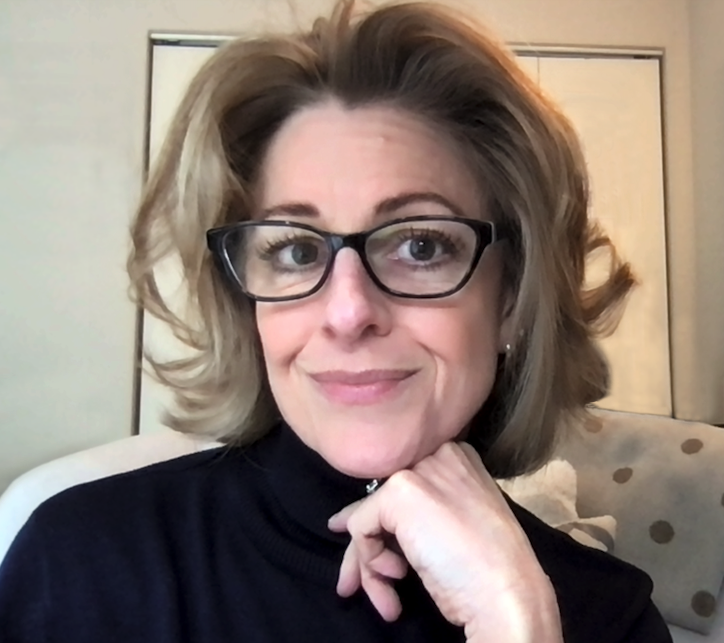
Michelle C. Ogle, M.A., Executive Coach, Organizational Consultant
Human behavior drives every organization.
For more than 30 years, Michelle has studied what captures attention, creates engagement, builds trust, influences decisions and drives behavior. As an executive coach, organizational consultant, and Possibility Strategist, she helps leaders apply those insights to strengthen relationships, align teams, and lead with greater impact.
Because The Heart Of Every Great Organization Still Beats Human.®
-Michelle Ogle, Bridge Executive Coaching