
AI At The Front Door of Business
Organizations are investing heavily in artificial intelligence, automation and efficiency tools. And why not?
Human beings have always looked for ways to improve, adapt, create and solve problems. Curiosity drives innovation. It always has. Every major advancement, from the printing press to the internet, began with someone asking, “What if there is a better way?”
It has been fascinating to watch the rapid expansion of AI. The possibilities seem almost limitless, bounded only by imagination and the willingness to experiment. In boardrooms and strategy meetings across the country, leaders are exploring new ways to increase efficiency, reduce costs, improve workflows and create better outcomes. And many of those applications make tremendous sense.
I use AI. I value AI. AI is extraordinary at research, organization, data processing, operational support and improving efficiency. In many ways, it is transforming how organizations operate – and for good reason.
What I have become increasingly curious about is something else entirely. Not whether organizations should use AI. But whether they are thinking strategically enough about where AI belongs.
Because sometimes, in the race to improve efficiency, organizations may be automating the very moments that create connection.
And those moments matter more than many leaders realize.
Are organizations asking the right question?
For customers, applicants, clients, patients and consumers, the first interaction with an organization often becomes the first impression of the brand itself. Increasingly, that first interaction is no longer with a person. It is with a system.
The question is no longer whether AI can be implemented. The more important question may be whether leaders are exercising enough discernment about where it should be.
Job applications. Customer service. Automated intake systems. AI chat functions. Endless prompts before reaching a human being.
The issue may not be the technology itself. The issue may be whether organizations have become so focused on capability that they have stopped evaluating the customer experience, branding implications and business consequences attached to implementation.
I do not know whether organizations are asking this question.
I do know that many consumers are experiencing the consequences.
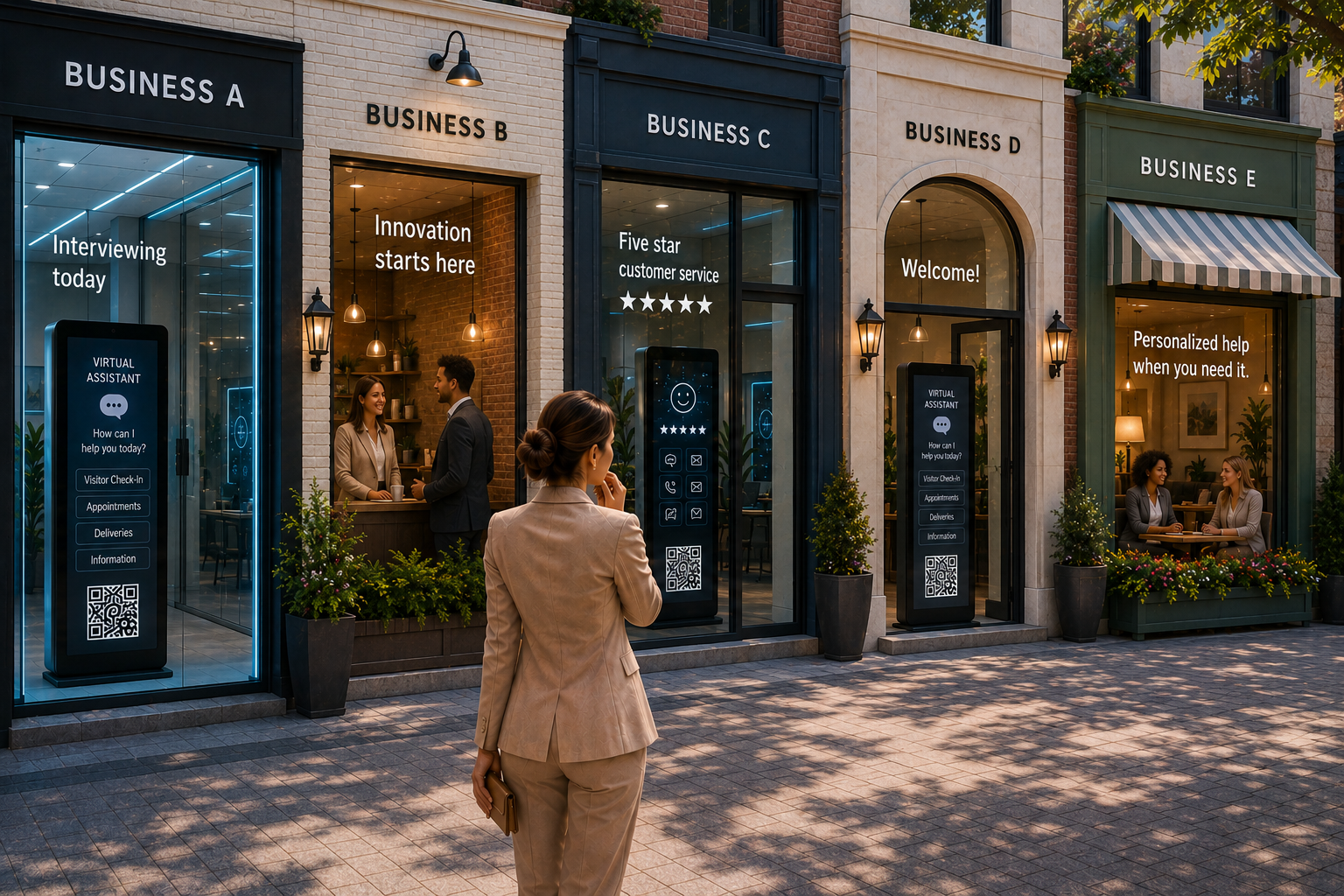
What Your Front Door Communicates
The first interaction with an organization immediately communicates something.
Whether someone is applying for a job, seeking support, exploring services, making a purchase or simply looking for information, they begin forming impressions long before they ever engage with a person.
Is help available?
Will I be able to get what I need?
Is this organization accessible?
Do people matter here?
The first interaction becomes part of the customer experience. People may not remember every step of the process, but they often remember how navigating that process felt.
The details fade. The experience lingers. Whether someone felt welcomed, helped, ignored or trapped in a system often becomes the lasting impression they carry about the organization itself.
Having spent more than 30 years studying what captures attention, creates engagement, builds trust, influences decisions and drives behavior, I have learned that people rarely remember every step of an interaction. They remember the experience. They remember how your brand made them feel.
Leaders would be wise not to underestimate the influence that experience has on loyalty, reputation and the bottom line.
Operational efficiency and customer experience are not necessarily the same thing.
A process can be efficient and still create frustration. It can reduce labor costs while increasing customer friction. It can move people through a system quickly while simultaneously leaving them feeling disconnected from the organization itself.
That does not mean automation is wrong. It simply means efficiency should not be the only metric being evaluated.
The Branding Question
What if this is also a branding issue? Organizations spend enormous amounts of time defining their culture, values, mission and customer experience. They carefully craft messaging about service, accessibility, responsiveness, innovation and community.
Perhaps a more important question is:
What message does the way people enter our organization communicate about who we are?
If an organization prides itself on relationships, personalized service, community engagement or customer care, what message is communicated when the first interaction consists of automated loops, inaccessible humans and systems designed primarily around efficiency?
Consumers notice these things. Perhaps not consciously. But they notice.
Every interaction either reinforces a brand promise or contradicts it.
Over time, those moments accumulate and shape trust.
The irony is that many organizations are investing heavily in branding while simultaneously creating entry experiences that may undermine the very identity they are trying to build.
Customers Want Help, Not Processing
Most consumers are not looking for perfection. They are looking for clarity, accessibility, responsiveness and confidence that help is available when they need it.
Think about a brick-and-mortar business.
In retail environments, employees are trained to greet customers, engage them, answer questions and create a welcoming experience. Whether it is a cell phone store, a clothing retailer, a technology store, or a local business, organizations understand that how people enter matters.
Nobody trains employees to avoid eye contact, ignore customers and move them through the store as quickly as possible. Why? Because everyone understands that customer experience influences satisfaction, loyalty and ultimately revenue.
Yet somehow, when interactions move online, many organizations seem willing to accept experiences they would never tolerate in person.
Consumers increasingly encounter endless prompts, routing loops, AI-generated conversations that feel scripted and repeated requests for information they have already provided. In some cases, organizations even automate concern itself, asking customers for feedback about an experience where no human support was available when it actually mattered.
The technology may be working exactly as designed. The question is whether the customer experience is.
The Business Consequence
This is where the conversation becomes more than a discussion about technology. It becomes a discussion about business.
In a difficult economy, consumers become increasingly selective about where they spend money, who they trust and which organizations feel accessible when problems arise.
Organizations may be underestimating how much customer experience influences buying decisions.
There may be two losses occurring simultaneously. The first is the loss of trust, loyalty and connection. The second is the financial impact that follows when customers quietly choose to take their business elsewhere.
Consumers are not simply purchasing products and services. They are deciding which experiences deserve their time, attention, trust and dollars.
In the race to appear innovative, some organizations may be unintentionally creating distance between themselves and the very people they hope to attract.
Strategic Placement Matters
Again, this is not an argument against AI. AI is powerful. Useful. Necessary in many environments.
The deeper question is whether organizations are thinking strategically about where it belongs. Not every interaction carries the same weight.
First contact matters. Hiring matters. Customer support matters. Moments of uncertainty matter. Moments of vulnerability matter. These are often the moments where trust is built, loyalty is reinforced and relationships are strengthened.
Just because an interaction can be automated does not necessarily mean the customer experience improves when it is.
AI is showing itself to be an extraordinary tool inside the house. The question is not whether AI belongs in the business. The question is whether it belongs at the first point of contact.
Leaders would be wise to think carefully before automatically placing it at the front door.
Tips:
• Evaluate where AI is being inserted, not simply whether it can be inserted.
• Review customer journeys through the lens of accessibility, trust and brand alignment.
• Identify moments where human interaction creates disproportionate value.
• Measure customer friction alongside operational efficiency.
• Review first-contact experiences with the same attention given to operational metrics.
Consider This:
As AI and automation expand, what measures are you using to ensure efficiency gains are not coming at the expense of connection, trust, accessibility, and customer experience?
Leading forward,
Michelle
Bridging The Gap - where insight leads to impact.
A monthly reminder that thinking requires space.
The Question Before The Answer
This month’s article explored whether organizations are asking the right questions before placing AI at the front door of business. That same principle applies to leadership.
Many leaders spend enormous energy searching for better answers, faster solutions and greater efficiency. Yet some of the most important insights emerge when we stop searching long enough to ask a better question.
Before your next decision, challenge, conversation or strategic initiative, try this:
Pause.
Not to solve.
Not to respond.
Not to act.
Simply ask: “What question am I not asking?”
Then sit with it for a few minutes.
No agenda.
No productivity goal.
Just curiosity.
Sometimes clarity doesn’t arrive because we think harder.
Sometimes it arrives because we finally create enough space to notice what has been missing all along.
Be curious.
Because The Heart Of Every Great Organization Still Beats Human.®
-Michelle Ogle, Bridge Executive Coaching
ADVANCED COACHING PROGRAM
Leadership Under Pressure
• Navigating conflict without sacrificing relationships
• Understanding the human dynamics driving performance and resistance
• Strengthen influence and decision-making when the stakes are high
• Build trust, alignment and influence in complex environments

Michelle C. Ogle, M.A., Executive Coach, Organizational Consultant
Human behavior drives every organization.
For more than 30 years, Michelle has studied what captures attention, creates engagement, builds trust, influences decisions and drives behavior. As an Executive Coach, Organizational Consultant and Possibility Strategist, she helps leaders apply those insights to strengthen relationships, align teams and lead with greater impact and outcomes.
Because The Heart Of Every Great Organization Still Beats Human.®
-Michelle Ogle, Bridge Executive Coaching