
The Humanistic Gap, Part 3: So, We Created A Director Title
We are getting better at naming the problem.
We are not getting better at solving it.
We’ve Seen This Before
Think about DEIB. When it was done with integrity – and it was, in many organizations – it moved culture. It created belonging and it gave people language for experiences they’d carried silently for years. Juneteenth is now recognized in workplaces across the country because people in those organizations took that work seriously and didn’t stop at the statement. That is what systemic change looks like and it deserves to be named.
I have also sat across from leaders in organizations who had the title, the statement and the initiative – and whose people were still experiencing racism and bullying behind closed doors. The external language changed but the internal lived experience did not. Naming something without applying systemic change is not progress. It’s performance and optics. The people inside those organizations know the difference – even when they’re too polite or too tired to say so out loud.
The Humanistic Gap is following the same pattern.
Why Is AI And Organizational Strategy So Secret?
I want to ask this as an honest question, not as an indictment.
Why do so many organizations keep their AI and other operational strategy behind closed doors until it becomes a crisis or a rollout without notice? There are legitimate reasons: legal caution, numbers still being worked out, fear of feeding the rumor mill before plans are solid. I understand that.
But I also want to name other possibilities: sometimes AI is used as cover for decisions that were already being made. Sometimes it is leaders who don’t want to share strategy because they don’t want push back by stakeholders. Sometimes the avoided push back is from employees doing the work and know better what is needed. It could be restructuring that was coming anyway or reductions that had nothing to do with technology. The uncertainty that employees feel in those situations isn’t paranoia. It’s pattern recognition built from experience.
What would it look like to share more and share earlier – not as a promise, but as a conversation?

What Silence Actually Costs
When people don’t have information, remember, they don’t sit in a neutral state of waiting. The human brain is built to reduce uncertainty, constantly constructing a story that creates a manageable model of reality before all the facts are available. In the absence of information, those stories can quickly become experienced as truth that will expand and sometimes turn into catastrophizing. The less information people have, the more they rely on past experiences to fill in the gaps.
I hear the same complaint consistently across organizations, across industries, across decades of coaching: I wish leaders would come see how the work is actually done before they make decisions about it. Come down here before you decide up there. The people doing the work have information leadership often doesn’t have – and that they aren’t asking for.
This is not a resilience problem. This is a respect problem and it predates every disruption we’ve discussed.
What Real Transparency Could Look Like
People want to know what is happening in their organization. Not every detail. Not premature commitments. But enough to think, to plan, to decide what the information means for them personally.
Leaders have time to sit with discomfort, work through the numbers and arrive at a plan. The workforce often gets the outcome without the process. That gap – in time, in information, in basic dignity – is where trust erodes quietly and consistently.
Transparency doesn’t require certainty. It requires honesty about what you know, what you don’t, and when you expect to know more. Leaders can share direction without sharing every detail. High-level communication is different from full disclosure. It’s the difference between breaking the silence and dismantling the wall.
One Title Is Not A System
A Chief Humanistic Officer is not going to make the rounds and check on everyone’s nervous system. Five EAP sessions are not going to close a gap that took years to open. A resilience workshop is not showing itself as sustainable integration from where I can see, hear about and experience first hand.
These responses are not wrong. They are insufficient.
When gestures such as these are positioned as solutions rather than supplements, they send a quiet but clear message to every employee: go figure out how to heal on your own time.
One role cannot carry the responsibility for an organizational challenge that belongs to the leadership. A title cannot create trust, transparency, psychological safety or meaningful inclusion. Those are built through consistent leadership behavior over time.
Before a Chief Humanistic Officer can sit at the executive table and advocate for employees, employees would first need to trust that role. Employees need to trust that they will be heard, trust that concerns will be acted upon and especially trust that speaking candidly will not carry consequences. In organizations where cynicism and skepticism have already taken root, that trust cannot simply be appointed. A title cannot inherit trust that has not yet been earned.
An organization that believes otherwise has confused liability management with genuine care.
The leaders who are getting this right aren’t doing it with a title. They’re doing it with consistency, honesty, transparency and the willingness to hear hard things without getting defensive. That’s not a framework. That’s character.
What Actually Closes The Gap
It is not a title and it is not a perk that is going to address The Humanistic Gap. It is not a wellness stipend or a ping pong table in the break room.
This gap needs transparency. This gap needs leadership to pause, notice and respect the employees’ experience. It’s giving them a voice – not as a promise, but to be heard. It’s giving them inclusion in the organization you want them to care about. It’s offering choice and ample time to respond.
Leaders who come down from altitude before they make decisions will earn trust from the people doing the actual work.
Intentional communication that doesn’t wait for a crisis will make a difference, but not just once. It’s inclusion that creates ownership over time. People who feel trusted and included tend to care about the long-term success of the organization to which they contribute.
The Humanistic Gap will not be closed by a new title, a new initiative or automation replicating humans. It will be closed by humans, choosing to lead differently.
Tips:
Share direction before every detail is finalized. People can tolerate uncertainty better than silence.
Ask the people doing the work what they are seeing before making decisions that affect them. Create a planned forum of small groups, not an emailed survey that disappears into a report. Employees often have valuable insight about what’s happening on the ground. Hearing the voice of your teams is not a commitment to implement everything they say. It’s a signal that they matter enough to be consulted. Why are organizations so reluctant to ask?
When you can’t answer a question yet, say so. “Here’s what we know today, what we’re still evaluating and when we’ll update you” builds more trust than waiting for certainty.
Distinguish between confidentiality and unnecessary secrecy. Not everything can be shared, but far more can be acknowledged.
Consider the difference between communication that manages perception and communication that builds trust. One is about control and the other is about relationships. Your employees already know which one you’re doing.
Consider This:
Have we become more comfortable creating structures to address human problems than having honest conversations with the humans experiencing them? The next time your organization begins discussing a major initiative, ask yourself:
“Who knows about this conversation today—and who will be expected to live with the outcome tomorrow?”
The distance between those two groups often determines whether people experience change as something they helped shape or something that happened to them.
Sometimes trust isn’t lost because of the decision. It’s lost because of the silence.
Closing Thought:
The Humanistic Gap was never about AI. AI simply made the gap easier to see.
It has always existed wherever strategy moved faster than communication, where efficiency outran relationships and where decisions were made without understanding the people expected to carry them.
Technology didn’t create that gap – it simply keeps illuminating it. Once we can see that gap, we have the opportunity and the responsibility to bridge that gap.
Leading forward,
Michelle
Bridging The Gap – where insight leads to impact.
A monthly reminder that thinking requires space.
Signal vs. Noise
If there is one thing today’s workforce is not lacking, it’s input.
Emails.
Meetings.
News alerts.
Strategic priorities.
Budget pressures.
Technology updates.
Constant change.
The human brain was designed to notice signals. Yet when the volume of input becomes relentless, everything begins to feel equally important. Signal becomes noise.
This month, consider a different question: What am I treating as urgent that is simply loud?
Notice what immediately comes to mind.
Then ask: What actually deserves my attention right now? Right now.
Clarity often doesn’t emerge from gathering more information.
Sometimes it emerges from reducing the noise long enough to hear what matters.
Be curious.
Because The Heart Of Every Great Organization Still Beats Human.®
-Michelle Ogle, Bridge Executive Coaching
ADVANCED COACHING PROGRAM
Leadership Under Pressure
• Navigating conflict without sacrificing relationships
• Understanding the human dynamics driving performance and resistance
• Strengthen influence and decision-making when the stakes are high
• Build trust, alignment and influence in complex environments
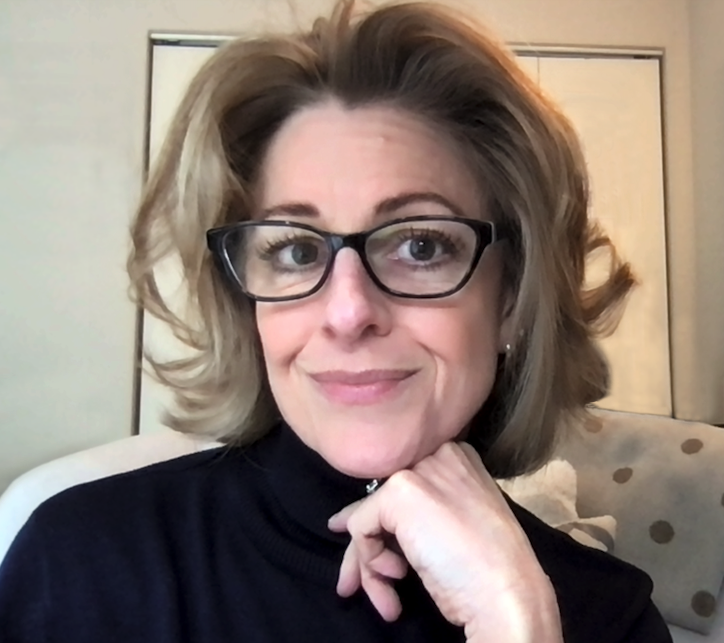
Michelle C. Ogle, M.A., Executive Coach, Organizational Consultant
Human behavior drives every organization.
For more than 30 years, Michelle has studied what captures attention, creates engagement, builds trust, influences decisions and drives behavior. As an executive coach, organizational consultant, and Possibility Strategist, she helps leaders apply those insights to strengthen relationships, align teams, and lead with greater impact.
Because The Heart Of Every Great Organization Still Beats Human.®
-Michelle Ogle, Bridge Executive Coaching