
Diminishing Returns In The C-Suite
“Work-life balance” is tired. It’s beige. It has no pulse anymore. Leaders nod at the phrase and move on. Nothing shifts.
The issue isn’t balance. It’s exchange rate. It’s about decision making and pattern recognition.
Every leader operates on one. You exchange time for outcomes. Energy for momentum. Availability for control. The exchange itself isn’t the problem. The problem is when the rate shifts and you don’t notice.
There is a level of leadership where working harder produces worse outcomes.
Early in your career, responsiveness has a high return. Answer fast. Solve fast. Move fast. That exchange rate builds reputation. At higher levels, the currency changes. The value shifts from speed to discernment. From availability to range. From intensity to timing.
Most leaders don’t have a workload problem. They have a calibration problem.
Are you a leader that still operates at the exchange rate that built you? Does your environment or your role now require something different?
Chronic overextension doesn’t prove commitment. It degrades executive function. When you’re cognitively depleted your thinking contracts. You default to what’s urgent, loud and immediately solvable.
Long-range scanning drops.
Observation lessens.
Pattern recognition weakens.
Creative options narrow.
You don’t become less intelligent. You become less expansive and strategically resourceful.
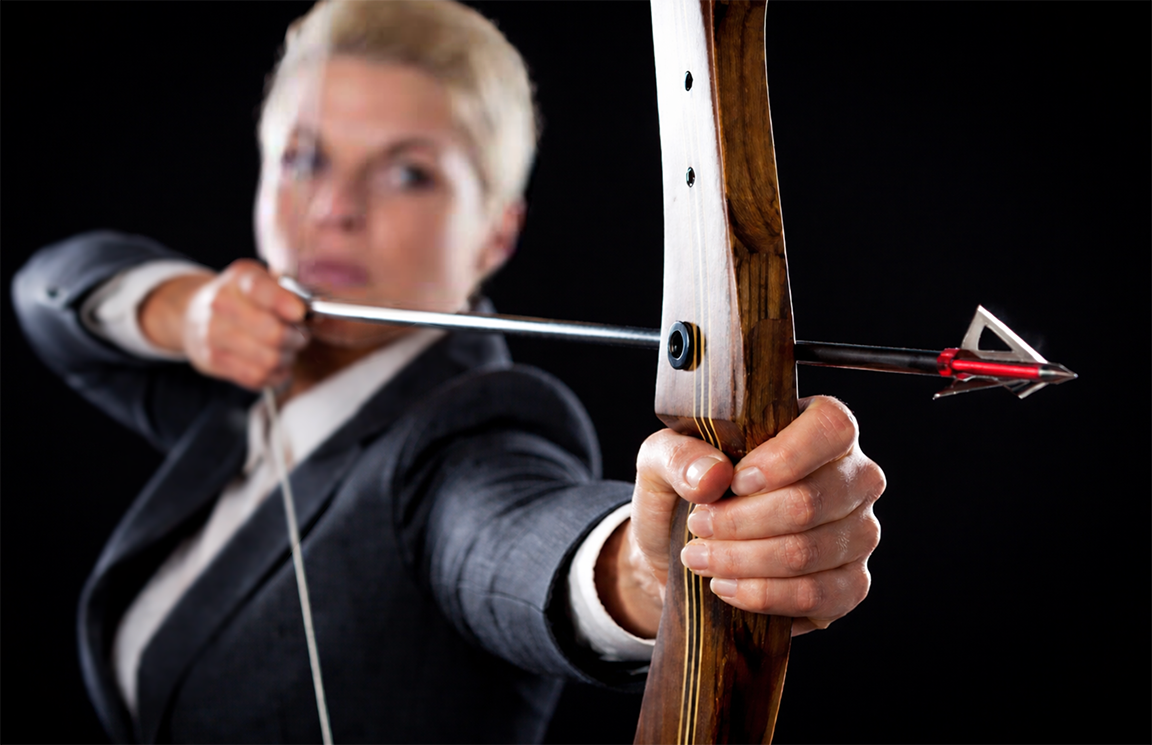
Expansion is where strategic advantage lives.
Strategic leaders win because they see further, hold complexity longer and recognize patterns others miss. They observe carefully. Contraction erodes that advantage quietly. That’s the cost that many leaders don’t calculate.
If you’re not calibrating your exchanges against outcome, exchange rate becomes a sophisticated way to rationalize overwork.
Leaders are not compensated for visible effort. They are compensated for discernment, timing and results. Every day, every meeting, every challenge and even every deadline.
Every exchange of time, attention and cognitive energy must increase clarity, range or execution quality. If it doesn’t, the rate is off.
If you think this doesn’t apply to you because you’re high capacity, let’s be real. You are not the exception. You do not operate at your sharpest when you are pushing harder to prove something. Cognitive depletion does not skip driven leaders. It hits them first because they overapply their intensity. If you believe you’re immune, that’s ego. And ego is controlling and expensive – not expansive.
When you’re overextended, you don’t become superhuman. You become narrower.
When you are overextended, you interrupt sooner. You decide faster. You mistake speed for clarity. You tell yourself you’re being decisive. Often, you’re just relieving pressure. There is a difference.
If you are constantly pushing to prove commitment, relevance or indispensability, you are giving away your most valuable asset: your range. You cannot convince me you operate sharply while chronically activated. You might operate fast. You might operate visibly. But sharp requires expansion. Sharp requires discernment. Sharp requires the ability to hold tension without collapsing into urgency.
Drive without discernment has a ceiling. Ego-driven intensity has a ceiling. If your drive is fueled by proving something, your exchange rate is already off because now your effort is serving ego, not outcome.
Leadership under pressure is not about how long you can stay activated. It’s about how long you can remain expansive while making decisions that affect other people.
The smartest leader in the room is rarely the one burning the most energy.
The sharpest leader in the room is the one protecting cognitive capital and deploying it with precision.
Tips:
Audit your exchange rate. Look at your calendar and ask: Which commitments increased clarity and strategic movement?
Which commitments simply maintained motion and might be better as a debrief email from one of your Deputy Directors instead?
Delay one response per day. When pressure rises, pause and widen before narrowing. Not to stall. To expand range. Others will wait.
Tie every major “yes” to a measurable outcome. If you can’t articulate the return, the rate is off.
End your day with targeted calibration, not collapse.
Identify the one decision tomorrow that requires expansion, not speed.
Track your reaction patterns: Where do you speak first? Where do you escalate tone? Where do you interrupt? Reaction leaves behavioral fingerprints.
Consider This:
Where is your ego telling you that constant availability equals indispensability?
Where has your role evolved, but your operating model has not?
What habit did you have to unlearn – to move from reacting to responding?
Where are you mistaking speed for discernment?
Where are old success habits – the ones that built your credibility – now limiting your range?
If your current operating model has a ceiling, are you willing to admit it?
You are not fooling the room. People experience your range. They experience your tone. They experience your patience window. They know when you are expansive. They know when you are contracted.
Presence is not the same as availability. Visibility is not the same as composure. An external view is often more objective than your internal narrative. Are you seeing yourself accurately? Or are you living by the belief that constant pressure proves leadership?
If you want to lead at a higher level, protect expansion. That’s where the edge actually lives.
High-performing leaders understand that the right exchange rate preserves their edge – keeping them sharp, adaptive, and strategically grounded when it matters most.
Leading forward,
Michelle
Bridging The Gap - where insight leads to impact.
A monthly reminder that thinking requires space.
February 15, 2026
When You’ve Made the Time – Now What?
You blocked the time.
Now you’re sitting there… and within three minutes or less your brain says:
“This is uncomfortable.”
“I should be doing something.”
“I’ll just outline that strategy while I’m here.”
That reaction is not a flaw. It’s conditioning. Pause and sit with it.
Most high-capacity leaders are wired for motion. Productivity feels safe. Output feels responsible. Stillness, on the other hand, can feel inefficient – even indulgent.
So the mind tries to convert this white space into a working session. But that’s not what this is.
Cognitive White Space is not structured problem-solving. It is structured openness.
It is the deliberate removal of input and pressure so the mind can integrate what it already knows.
The discomfort you feel in the first few minutes is not a signal that you’re wasting time. It’s a signal that you’ve interrupted the habit of constant production and consumption.
Sit with it. That interruption matters.
Insight rarely arrives when summoned.
Insight arrives when permitted. When you stop forcing conclusions, connections begin to surface. Themes repeat. Nuances combine. The “what if” becomes clearer than the “what’s next.”
This is why white space can feel unproductive at first. There is no visible output. No artifact. No immediate win. Integration is quiet.
If you’ve made the time, here’s what to do with it:
Place yourself somewhere that cannot be easily interrupted – outside, on a walk, or simply away from your desk.
Bring one open question – not a list.
Remove input – no email, no articles, no notifications.
Let your mind wander without steering it toward a solution. This takes practice.
Notice what returns more than once.
If nothing “productive” happens, that does not mean nothing happened. Especially if this is new – the pressure that something must occur is often the very thing that prevents it.
Clarity forms beneath awareness before it becomes language.
The goal of cognitive white space is not to produce something. It is to create the conditions where your best thinking can surface.
If it feels uncomfortable, you’re likely doing it right.
Be curious. Practice. It will pay off.
Because The Heart Of Every Great Organization Still Beats Human.™
-Michelle Ogle, Bridge Executive Coaching
ADVANCED COACHING PROGRAM
Leadership Under Pressure
• Managing conflict with composure
•Think clearly and effectively under pressure
• Create meaningful impact with any message
• Respond with calm in complex environments.
Reduce the Noise. Restore Internal Authority.
A facilitated conversation leaders can offer their teams to help them cut through distraction, trust their judgment, and collaborate more effectively under pressure.
No culture slogans.
No fixing people.
No selling.
Just a grounded, human conversation that makes work feel lighter and clearer again.
Curious if this would help your team right now?

Michelle C. Ogle, M.A., Executive Coach, Organizational Consultant
Michelle brings a fresh perspective to human-centered focus, behavioral insights for leadership, and deep expertise in business relationships to help leaders build trust, align teams and create cultures that thrive.
Because The Heart Of Every Great Organization Still Beats Human.™
-Michelle Ogle, Bridge Executive Coaching